
Arthur Fils arrived in Cincinnati in August 2026 as one of the most highly regarded young players on the ATP Tour, but he left Ohio with a different status. By beating Frances Tiafoe 6–3, 1–6, 6–0 in the final, the 22-year-old Frenchman secured the first Masters 1000 title of his career and the biggest trophy he had won at senior level. The result was significant beyond a single successful tournament. Fils had already produced several deep runs during an impressive comeback season, and Cincinnati finally provided the victory that turned potential into something measurable. His rise has naturally created a bigger question: is Fils now capable of challenging regularly for the most important titles in men’s tennis? His 2026 results make a strong case, although there are still important differences between winning a Masters event and becoming a consistent Grand Slam contender. The evidence suggests that Fils has moved into the ATP elite, but his next challenge is proving that Cincinnati represents a new standard rather than the high point of one exceptional season.
Cincinnati Turned Arthur Fils from a Prospect into a Masters Champion
Fils won the Cincinnati Open on 23 August 2026 after a final that demonstrated both his strengths and his growing ability to recover when a match changes direction. He controlled the opening set against Tiafoe, struggled badly in the second and then responded with a 6–0 deciding set. The final lasted one hour and 28 minutes and gave Fils his first Masters 1000 trophy in his first final at this level. The scoreline also captured something important about his development. Earlier in his career, periods of frustration could quickly become expensive, particularly against experienced opponents. Against Tiafoe, losing the second set 1–6 did not decide the match. Fils reset immediately, regained control of the rallies and produced his most convincing tennis when the title was actually at stake. For a player trying to move from talented outsider to regular contender, that response mattered almost as much as the trophy itself.
The route to the title makes the achievement considerably more persuasive. Cincinnati was not a week in which Fils benefited from a succession of favourable match-ups. He defeated Jiri Lehecka in three sets and then produced a particularly impressive 6–3, 6–4 victory over Alex de Minaur, one of the most difficult players on the Tour to overpower consistently. In the semi-final, Fils beat Flavio Cobolli 6–3, 6–4 before overcoming Tiafoe in the championship match. Several of those opponents were established inside or around the world’s Top 20, while de Minaur and Cobolli were Top 10 players. Fils therefore had to sustain his level against different types of opposition rather than rely on one major upset. That distinction is important when judging whether a breakthrough title can be repeated. The Cincinnati run showed that he could beat high-level opponents several days in succession and still produce enough energy and quality for the final.
The victory also carried considerable importance for French tennis. Fils became the first Frenchman to win a Masters 1000 title since Jo-Wilfried Tsonga captured the Canadian event in Toronto in 2014. At 22, he also became the youngest French Masters 1000 champion since the category was formally established in 1990. He had already been presented as one of the leading players of France’s new generation, but Cincinnati gave that position much greater substance. Previous French talents have reached the upper levels of the rankings without necessarily converting their best periods into the largest trophies. Fils now has a Masters title on his record at an age when many players are still trying to establish themselves in the Top 20. It does not guarantee that he will follow with Grand Slam success, but it changes the basis of the discussion. He is no longer being judged only on what his game might eventually produce. He has already won one of the most difficult tournaments below Grand Slam level.
Why the Cincinnati Title Was More Than One Exceptional Week
The strongest argument for taking the Cincinnati result seriously is what Fils had achieved before arriving in Ohio. His 2026 season began late because he was still recovering from the stress fracture in his lower back that had disrupted much of 2025. He did not play the Australian swing and finally returned to competition in Montpellier in February after roughly eight months away from regular ATP action. Yet the results came surprisingly quickly. Fils reached the final of the ATP 500 event in Doha, the quarter-finals at Indian Wells and the semi-finals at the Miami Masters. On clay, he won the Barcelona ATP 500 title and then reached another Masters 1000 semi-final in Madrid. Cincinnati therefore did not appear from nowhere. By August, Fils had already spent several months showing that he could go deep in strong fields on both hard courts and clay.
His season becomes more impressive when the interruptions are taken into account. The back problem that started at Roland Garros in 2025 was serious enough to keep him away for months, and an attempted return later that summer proved premature. After rebuilding his season in early 2026, Fils then suffered another physical setback during the European clay swing. A hip problem prevented him from playing Roland Garros, and he only returned shortly before Wimbledon. That history makes his Cincinnati performance notable for another reason: it came from a player who had not enjoyed a smooth, uninterrupted preparation. By 24 August, the ATP listed Fils with a 32–10 tour-level record for 2026 despite his absence from the Australian Open and Roland Garros. Winning at that rate while repeatedly having to regain competitive rhythm is evidence of a player whose underlying level has risen significantly.
There have also been visible improvements in areas that previously made Fils vulnerable. His forehand and athletic ability have never been difficult to notice, but in 2026 he has become better at protecting his service games and choosing when to attack. ATP statistics around Cincinnati showed that he was winning a higher share of points behind his second serve than across his career as a whole, an improvement that helped him avoid giving opponents repeated opportunities to take control. More importantly for ordinary viewers, his tennis has looked less dependent on constant spectacular hitting. He can still accelerate brutally from the baseline, but he is increasingly prepared to construct a rally, defend when necessary and wait for the right ball. That makes him more difficult to play across a complete tournament. The involvement of former Wimbledon champion Goran Ivanisevic in his team during 2026 has also given Fils access to someone with extensive experience of both major matches and the pressures faced by leading players.
Why Fils Now Belongs in the Conversation for Major ATP Titles
Fils has built a record that is increasingly difficult to dismiss as simple promise. His first ATP title came in Lyon in 2023, when he was still only 18. In 2024, he won ATP 500 trophies in Hamburg and Tokyo, beating Alexander Zverev in the Hamburg final and Ugo Humbert in an all-French final in Japan. Barcelona became his fourth tour title in April 2026, and Cincinnati his fifth. Those victories have come on both clay and hard courts, an important detail for any player with ambitions beyond a specialist role. Fils can generate enough power to dominate on quicker hard courts, but his movement and patience also allow him to compete effectively on clay. By the end of September 2026, that broader consistency had taken him to a career-high world ranking of No. 9. Reaching the Top 10 at 22 does not automatically make someone a future Grand Slam champion, but doing it alongside victories at ATP 500 and Masters 1000 level provides a much stronger foundation.
His tennis also contains many of the qualities needed to win large tournaments. Fils is physically powerful, moves extremely well for a player with such an aggressive game and is comfortable taking responsibility for points rather than waiting for an opponent to miss. His forehand can change the direction of a rally very quickly, while his improved serve gives him more opportunities to begin points on his own terms. He has also become increasingly comfortable against highly ranked opponents. In 2026 alone, his runs in Indian Wells, Miami, Madrid and Cincinnati required him to compete repeatedly with players accustomed to the later rounds of major ATP events. That experience matters because title contention is not simply about producing a brilliant match against a famous opponent. The strongest players have to repeat the same level against several dangerous rivals within the space of a week. Cincinnati provided the clearest evidence yet that Fils can do exactly that.
There is another reason his progress deserves attention: he is developing during a period in which the top of men’s tennis is extremely demanding. Jannik Sinner and Carlos Alcaraz have established standards that leave little room for inconsistency, while players such as Alexander Zverev, Ben Shelton, Alex de Minaur, Taylor Fritz and others continue to make the later stages of major events difficult to reach. A young player cannot enter that group simply because he looks talented. He needs results against the same competition. Fils now has enough of those results to be included in the wider group of players capable of winning a Masters 1000 when playing well. Cincinnati removed one of the main questions surrounding him because he has now completed a full title run at that level. The remaining issue is whether he can make the next step and challenge the very best players when they are also playing close to their peak.
What Still Separates Him from Sinner, Alcaraz and the Established Elite
The matches against the very best players provide a useful reality check. Fils reached the Doha final in February 2026, but Carlos Alcaraz beat him 6–2, 6–1. A few months later, Fils reached the Madrid Masters semi-finals and faced Jannik Sinner. Again, the gap was visible, with Sinner winning 6–2, 6–4. Those defeats do not undermine Fils’ progress; reaching those rounds so soon after a long injury lay-off was already significant. They do, however, show why one Masters trophy should not immediately place him alongside the two leading players of his generation. Sinner and Alcaraz have developed an ability to raise their level at the end of the biggest events and to prevent aggressive opponents from playing on comfortable terms. Fils has shown that he can dominate many excellent players. He has not yet shown that he can do it regularly against the men setting the standard at the very top.
Grand Slam tennis also remains the largest unanswered question. Fils’ best major result through October 2026 is still his run to the fourth round at Wimbledon in 2024. He reached that stage by coming through a difficult five-set match against Roman Safiullin before his run ended against Alex de Minaur. Since then, injuries have repeatedly complicated his Grand Slam schedule. The back stress fracture forced him out of Roland Garros in 2025 after the second round, he missed the 2026 Australian Open while recovering and another injury kept him out of Roland Garros in 2026. At Wimbledon that summer, he returned to win his opening match but lost to Matteo Berrettini in the second round. None of this suggests that Fils lacks the game for a major. It does show that he has not yet accumulated enough healthy, uninterrupted Grand Slam experience to be considered one of the leading favourites at those tournaments.
The 2026 US Open provided the clearest reminder that Masters success and Grand Slam consistency are different challenges. Just eight days after lifting the trophy in Cincinnati, Fils faced Stefanos Tsitsipas in the first round in New York. The Frenchman won the opening set and had a break advantage in the second, but his energy and control fell away as the match progressed. Tsitsipas recovered to win 4–6, 7–6, 6–1, 6–4. Fils later acknowledged that his energy had dropped and that he had struggled to recover it. The defeat was striking because the tennis that had carried him through Cincinnati was still recent, yet a best-of-five match punished the decline much more severely. For Fils to become a genuine Grand Slam favourite, he will need to manage these physical and emotional changes across longer matches and then repeat that effort over seven rounds. That is a different test from winning a Masters event, even for a player whose peak level is already high enough to trouble almost anyone.
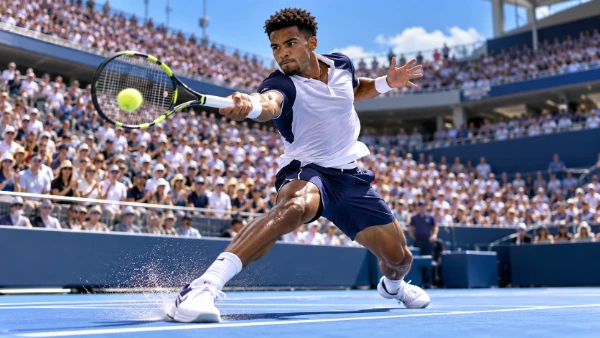
The Next Test for Arthur Fils Is Consistency, Not Potential
By early October 2026, the argument around Fils had therefore changed. The question was no longer whether he had enough talent to reach the Top 10. He had already done it, climbing to a career-high No. 9 in late September. Nor was it reasonable to wonder whether he could win a major ATP tournament, because Cincinnati had answered that directly. What remains uncertain is how often he can reproduce that standard. The best players are separated from the rest of the Top 20 by the frequency of their deep runs as much as by their highest level. Fils’ 2026 season has included a Doha final, an Indian Wells quarter-final, Masters semi-finals in Miami and Madrid, an ATP 500 title in Barcelona and the Masters 1000 title in Cincinnati. That is a substantial collection of results for a 22-year-old, particularly after a long injury absence. The next stage is turning such runs into the normal pattern of his season rather than exceptional peaks.
His results after Cincinnati have reinforced both sides of the argument. The first-round defeat at the US Open was a disappointment, but Fils responded during the Asian swing rather than allowing one poor result to define the rest of his year. At the Japan Open in Tokyo, where he had won the title in 2024, he defeated fellow Frenchman Luca Van Assche and then beat Tiafoe 6–3, 7–5 on 2 October. It was a useful result because Tiafoe had been his opponent in the Cincinnati final, and beating him again showed that the earlier victory was not dependent on one particular day. Fils’ Tokyo run ended in the quarter-finals on 4 October, when Valentin Vacherot defeated him 7–5, 4–6, 6–4. Fils had opportunities in that match but could not convert them into another deep run. It was a relatively ordinary defeat by Top 10 standards, which is precisely why it provides useful perspective alongside the much bigger Cincinnati success.
The wider 2026 Masters season also shows the level Fils is trying to reach. Sinner dominated the first part of the schedule by winning Masters titles at Indian Wells, Miami, Monte-Carlo, Madrid and Rome, while Shelton took the Canadian title before Fils won Cincinnati. Against that background, the Frenchman’s breakthrough is significant but not enough by itself to alter the hierarchy at the top of men’s tennis. To do that, he will need to challenge for several of these tournaments in the same season and, most importantly, become a regular factor during the second week of Grand Slams. His physical condition will be central to that process. Two seasons affected by back and hip problems have already shown that availability cannot be taken for granted. If Fils can remain healthy for a complete year, the number of opportunities to test himself against Sinner, Alcaraz and the rest of the elite should rise considerably.
Is Arthur Fils Already a Contender for the Biggest Trophies?
As of October 2026, the most accurate answer depends on the type of title being discussed. At Masters 1000 level, Fils is already a genuine contender. That is no longer a prediction. He has won Cincinnati, reached the semi-finals in Miami and Madrid during the same season and produced strong results against established Top 10 and Top 20 opponents. His performances on both hard courts and clay also mean that his chances are not restricted to one narrow part of the calendar. Entering another Masters tournament, it would now be reasonable to place him among the players capable of reaching the final and winning the trophy. A difficult draw would not change that assessment, because Cincinnati demonstrated that he can come through several demanding matches rather than requiring the leading seeds to disappear before he reaches them.
At Grand Slam level, the assessment should be more cautious. Fils has the physical tools and attacking ability to make a major run, but he does not yet have the results that justify placing him alongside Sinner, Alcaraz or the other leading Grand Slam favourites. His only appearance in the second week of a major remains Wimbledon 2024, while his 2025 and 2026 campaigns have repeatedly been interrupted by injuries. The US Open loss immediately after Cincinnati also showed how quickly a seemingly favourable match can become complicated over five sets. That does not make a future Grand Slam challenge unlikely. It simply means that the evidence is not yet as strong as it is at Masters level. A sustained run to a Grand Slam quarter-final or beyond would change the discussion considerably because it would prove that his game and body can handle the longer format across repeated high-pressure matches.
Cincinnati nevertheless marked a genuine change in Arthur Fils’ career. At 22, he has five ATP titles, victories at ATP 500 level on different surfaces, a Masters 1000 trophy and a place inside the world’s Top 10. He achieved much of that after spending months away from competition with a serious back injury and dealing with another interruption in 2026. That combination of results, age and resilience gives him more than the profile of a promising young player. He is already part of the group immediately below the men who currently dominate the largest events. The remaining distance is substantial, particularly at Grand Slams, but it is now a distance that can be measured through results rather than imagined through potential. Cincinnati did not prove that Fils will become a multiple major champion. It proved something more concrete: when healthy and playing at his best, he already has the level to win one of the ATP Tour’s most important titles and to make the established elite take him seriously.