
Alexander Zverev arrived at the 2026 US Open as the men’s top seed and a genuine contender for the title, but his tournament could hardly have begun with a greater physical test. Lorenzo Sonego kept him on Arthur Ashe Stadium for four hours and 53 minutes before Zverev finally completed a 6-4, 3-6, 6-7(7), 7-5, 6-4 victory. The German was only two points from defeat in the fourth set and did not finish until 1:55 a.m. in New York. Surviving such a match can strengthen a player mentally, particularly so early in a Grand Slam, but it also creates an obvious question: how much will those five sets cost Zverev later? There is no evidence yet that the marathon has seriously damaged his chances, but the answer will depend on how quickly he can recover and, just as importantly, how efficiently he handles the next few rounds.
What the Sonego Marathon Actually Took Out of Zverev
The score alone does not fully describe the difficulty of Zverev’s first round. He won the opening set but then spent much of the next two sets trying to contain an increasingly confident Sonego. The Italian took the second set and edged a lengthy third-set tie-break, leaving the top seed one set from elimination. At 4-5 in the fourth, Zverev was just two points from losing the match altogether. Instead of allowing the pressure to decide the contest, he held, broke Sonego and forced a fifth set. That recovery was encouraging because Zverev did not win simply because his opponent collapsed. He still had to find a better level late in a match that had already placed both players under considerable physical and mental strain.
One of the most revealing figures was Zverev’s 22 break-point opportunities. He converted only five of them, which meant he repeatedly worked his way into promising positions without ending games quickly. That helped turn a difficult first-round match into a near five-hour contest. Sonego also played aggressively and frequently moved forward, refusing to allow Zverev to settle into a predictable rhythm from the baseline. Zverev eventually became more effective on return and moved more freely as the match progressed, but his performance contained enough loose periods to keep Sonego involved. For a player expected to challenge for the trophy, the concern is therefore not simply that he spent 4:53 on court. It is that a considerable part of that time resulted from an inability to take control when opportunities appeared.
Zverev’s own reaction was noticeably less alarmed than the length of the contest might suggest. He described it as the longest first-round match he could remember playing, but he also viewed the victory as useful. After the match he acknowledged that there was still room for improvement and pointed in particular to an unusually high number of missed backhands. He also explained that his 2026 season had been both successful and demanding, and that after Wimbledon he may have relaxed a little too much before trying to rebuild his competitive rhythm. In that context, he saw the Sonego match as a contest he needed rather than simply four hours and 53 minutes of unwanted punishment. There was also no immediate public indication of a specific injury resulting from the match, an important distinction when assessing the possible consequences.
Why a Five-Hour First Round Matters More Than It Looks
A long match in the opening round is different from a marathon played at the end of a tournament. Zverev does have time to recover, but if he wants to reach the final he may still have another six matches to play. Fatigue at Grand Slams is often cumulative. One demanding night does not necessarily cause a problem in the following round, especially for a player with Zverev’s experience, but repeated four- and five-set matches can become increasingly expensive. The first round also finished at 1:55 a.m., which matters because recovery does not begin the moment the final point is played. Players still have post-match treatment, food, media commitments and travel back to their accommodation before they can sleep. A very late finish can therefore affect the following day even when there is no injury.
The encouraging part for Zverev is that he has a long history of coping with demanding best-of-five matches. At 29, he is not encountering this situation for the first time, and his game is built around qualities that can remain effective even when rallies become physically taxing. His first serve can give him inexpensive points, while his reach and defensive ability allow him to survive difficult periods without constantly attacking. The danger appears when those advantages stop producing short service games. If his first serve percentage falls or he starts requiring several attempts to break an opponent, court time increases rapidly. Against Sonego, the problem was not a visible physical collapse. Zverev actually improved late in the match. The question is whether that same energy will still be available after several more rounds.
His results earlier in 2026 provide strong evidence that his body can handle Grand Slam workloads. Zverev finally won his first major title at Roland Garros, where the final itself lasted four hours and 19 minutes, and he later reached the Wimbledon final. He also made the Australian Open semi-finals. By the end of his US Open first round, he had collected an ATP-leading 47 tour-level victories during the season, including 19 at Grand Slams. Those numbers make two opposite arguments at once. They show that he has been one of the most durable and consistent players of the year, but they also show how much competitive tennis is already in his legs. The Sonego match therefore needs to be viewed as another addition to a substantial 2026 workload rather than as an isolated five-set encounter.
Quentin Halys Is a Manageable Draw, but Not an Easy Recovery Match
Zverev’s second-round opponent gives him reasons for confidence. Quentin Halys entered the match ranked No. 52, while Zverev was the world No. 2 and the top seed in New York. More importantly, they have already met twice in 2026 and Zverev won both matches. Their first meeting came on the Miami hard courts, where the German won 7-6(4), 7-6(1). They met again in the third round of Roland Garros, with Zverev winning 6-4, 6-3, 5-7, 6-2 on his way to the title. The 2-0 head-to-head record gives Zverev useful familiarity with the Frenchman’s game, although neither victory was completely straightforward. Halys has already shown that he can keep sets close and that his power can make it difficult for Zverev to establish comfortable control.
Halys is also the type of opponent who can make recovery difficult to judge. His aggressive tennis and strong serve may produce plenty of short points, which could actually help Zverev after the physical demands of round one. At the same time, a player who serves well can force sets towards tie-breaks even when the favourite is generally playing better. Their Miami meeting is a clear example: Zverev won in straight sets but needed two tie-breaks. At Roland Garros, Halys took a set. The main risk is therefore not that Zverev must immediately endure another sequence of exhausting rallies comparable with the Sonego match. It is that a few loose return games or missed opportunities could make the contest considerably longer than necessary.
The schedule at least gives Zverev a reasonable recovery window. He finished against Sonego early on Wednesday morning and is due to face Halys in the Thursday night session on Arthur Ashe Stadium, after Coco Gauff’s match against Paula Badosa. That gives him more than 40 hours between competitive appearances, despite the unusual finishing time of the first round. A night match also means he does not have to prepare for an 11 a.m. start. The disadvantage is obvious: if Halys takes him into another lengthy contest, Zverev could have a second late finish in three days. At this stage, the first-round marathon is manageable. Another long evening would change the calculation because the third round follows quickly and opportunities for full recovery become progressively smaller as the tournament advances.
The Key Question Is Whether Zverev Can Shorten the Match
Zverev does not need to produce flawless tennis against Halys. What he needs is greater efficiency. Against Sonego, creating 22 break opportunities demonstrated that he was regularly getting into his opponent’s service games, but converting only five allowed the match to continue far longer than it might have. Against Halys, taking an early break could have an effect beyond the scoreboard. It would allow Zverev to play his own service games with less pressure and reduce the chance of another set being decided by a tie-break. His serve is particularly important here. When Zverev is holding quickly, opponents have fewer chances to involve him in repeated physical exchanges and he can direct most of his energy towards a small number of return games.
The opening set should therefore tell us more about Zverev’s recovery than simply watching whether he looks tired. Players can feel heavy after a marathon without being unable to perform. More useful signs will be whether he is moving normally into wide balls, finding his usual timing on the backhand and maintaining his serving rhythm. His own assessment after round one was that he had missed more backhands than normal. If that shot is cleaner against Halys, it would suggest that some of the problems against Sonego were related to match sharpness rather than physical decline. If his movement is slower and his errors increase as rallies lengthen, then the effect of the previous match would become more difficult to dismiss.
There is also a psychological opportunity. Surviving two points from defeat can remove some of the tension that accompanies being the top seed at a Grand Slam for the first time. Zverev has already experienced the worst possible opening-round scenario short of elimination and still remains in the tournament. That can help a player become more decisive, particularly after admitting that he struggled to regain full competitive intensity following Wimbledon. The best outcome against Halys would therefore be relatively simple: establish control early, protect his service games and avoid turning another potentially manageable match into a test of endurance. A three-set victory would not erase the physical cost of Tuesday night, but it would give Zverev a much better chance of beginning the third round with his energy reserves largely restored.
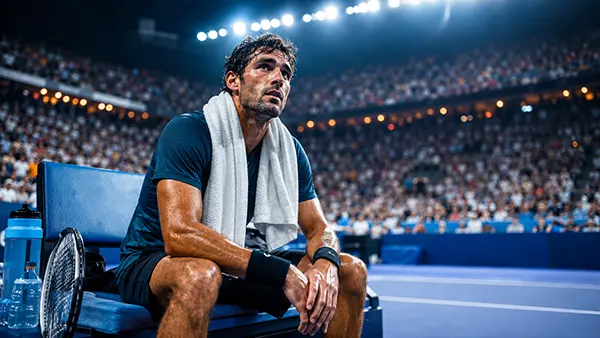
Could the Marathon Cost Zverev Later in New York?
At this point, treating the Sonego match as a major physical crisis would be premature. Zverev finished strongly enough to win the final two sets, did not publicly identify a new injury and has a full day without a match before facing Halys. Elite players regularly recover from five-set contests during Grand Slams. The greater concern is what happens next. One marathon can be absorbed; two or three in the first week can become a genuine disadvantage against fresher opponents. This is especially relevant for Zverev because his ambitions extend far beyond simply reaching the middle rounds. As the No. 1 seed and the reigning Roland Garros champion, the standard by which his US Open will be judged is whether he can remain competitive deep into the second week.
His 2026 season makes that balancing act particularly interesting. Reaching the latter stages of the Australian Open, Roland Garros and Wimbledon before arriving in New York demonstrates exceptional consistency, but deep Grand Slam runs also create a workload that players who lose earlier do not accumulate. Zverev has repeatedly shown that he can play long matches, recover and win again, yet durability is not the same as having unlimited energy. Every additional hour on court can matter when the quality of opposition rises. A tired player may still serve at full speed and hit winners, but small losses in movement, concentration and decision-making can decide close sets. For Zverev, the real cost of 4:53 against Sonego might therefore appear several rounds later rather than against Halys.
There is another side to the argument. Zverev did not arrive in New York searching for proof that he can survive pressure at a major. His Roland Garros title has already removed the largest unanswered question of his career, and the comeback against Sonego showed that he remains willing to fight through a difficult night instead of allowing frustration to take over. A first-round scare can sometimes sharpen a contender by exposing weaknesses early enough to correct them. Zverev now knows that his backhand, return efficiency and ability to take break points need improvement. If he responds by playing cleaner, shorter matches, the Sonego contest may ultimately be remembered more as an early warning than as the moment his US Open campaign was physically compromised.
What Would Count as a Good Sign in Round Two?
The first positive sign would be normal movement from the beginning of the Halys match. Zverev does not need to sprint through every point, but he should be able to defend the corners, recover his position and step forward when Halys leaves a shorter ball. The second would be a stable serving performance. Quick holds would reduce both physical effort and scoreboard pressure. The third would be greater efficiency on return. Creating another large number of break chances would mean little if most of them disappear. After converting five from 22 against Sonego, even a modest improvement could substantially reduce the amount of time Zverev spends on court. None of these indicators is especially complicated, but together they will show whether his body and timing have recovered from the opening round.
A relatively comfortable victory would change the discussion quickly. If Zverev beats Halys in three sets without a very long tie-break or extended service games, he will have a further recovery period before the third round and the 4:53 opener will begin to look less threatening. The tournament format gives players a chance to repair the damage from one difficult match provided the next one is controlled. Conversely, another four- or five-set contest would make fatigue a much more serious subject. At that point Zverev would have spent a large portion of the opening week competing rather than recovering, and the effect would have to be considered when assessing his chances against stronger opponents later in the draw.
So, will the Sonego marathon become a problem for Alexander Zverev at the 2026 US Open? As of 3 September, the fairest answer is: not necessarily, but it has reduced his margin for error. His physical condition appeared good enough to finish a five-set comeback, his next opponent is someone he has beaten twice this season, and his results throughout 2026 show that he can handle demanding Grand Slam tennis. What he cannot afford is to make nearly five-hour matches a pattern. If Halys is dealt with efficiently, the opening round may even prove useful by restoring the competitive edge Zverev felt he had been missing. If Thursday becomes another late-night battle, however, the cumulative workload will become one of the most important questions surrounding his attempt to win a second major title.