
The 2025–26 NBA regular season reshaped expectations across both conferences, exposing new contenders while raising questions about established favourites. Injuries, tactical evolution, and roster depth played a decisive role in redefining the hierarchy. As teams enter the playoffs, the competitive landscape looks more unpredictable than in previous years, with several franchises demonstrating sustainable systems rather than relying solely on star power.
Eastern Conference: From Stability to Tactical Flexibility
The Eastern Conference no longer revolves around one or two dominant teams. Instead, the season highlighted a broader distribution of strength, particularly among franchises that invested in defensive versatility and transition efficiency. Teams like Boston and Milwaukee remained relevant, but their dominance was challenged more consistently than in previous campaigns.
New York and Cleveland showed measurable growth in offensive structure, focusing on spacing and ball movement rather than isolation-heavy play. This shift resulted in improved efficiency metrics and a stronger ability to control tempo during close games, which is critical in playoff scenarios.
Meanwhile, emerging squads such as Orlando demonstrated that youth combined with disciplined coaching can disrupt more experienced opponents. Their defensive schemes, particularly in limiting perimeter shooting, became one of the defining tactical trends in the East this season.
Key Factors Behind the Eastern Shift
One of the main reasons behind the balance shift is the league-wide emphasis on two-way players. Teams that relied on specialists struggled when rotations tightened, while those with adaptable line-ups gained a clear advantage. This trend was especially visible in late-season matchups.
Another factor is load management and injury prevention strategies. Franchises that successfully maintained player availability during the regular season now enter the playoffs with stronger cohesion and rhythm, which often outweighs raw individual talent.
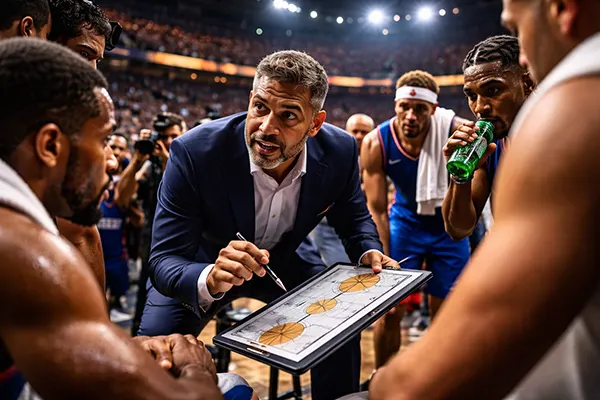
Coaching adjustments also played a role. Tactical flexibility, including switching defensive schemes mid-game and experimenting with smaller line-ups, became more common. These adjustments reduced predictability and made traditional scouting less effective.
Western Conference: Depth Over Star Dominance
The Western Conference presented a different narrative, where depth and rotation quality overshadowed individual star performances. While teams like Denver and Phoenix remained competitive, they faced increasing pressure from deeper squads capable of sustaining performance across all four quarters.
Oklahoma City emerged as one of the most structured teams in the league, combining youth with a clearly defined system. Their ability to maintain pace and execute late-game decisions made them a serious playoff contender rather than a developmental project.
At the same time, franchises such as Minnesota and Dallas refined their identity. Minnesota leaned heavily on defensive discipline, while Dallas improved ball distribution around its core players, reducing predictability in half-court offence.
Why the West Became More Competitive
The Western Conference benefitted from improved bench production across multiple teams. Second units contributed consistently, allowing starters to remain effective deeper into games. This shift reduced reliance on high-usage players.
Another important development was the increased role of analytics in in-game decision-making. Shot selection, defensive positioning, and substitution timing became more data-driven, leading to more efficient performances overall.
Finally, travel and scheduling adjustments influenced performance consistency. Teams that adapted better to condensed schedules showed fewer fluctuations, which translated into stronger seeding positions heading into the playoffs.
Playoff Outlook: What to Expect in 2026
Entering the playoffs, the absence of a clear favourite makes series outcomes harder to predict. Matchups will depend heavily on tactical execution rather than reputation. Teams capable of adjusting between games are more likely to progress deep into the bracket.
Defence is expected to play a central role, particularly perimeter defence against three-point shooting. The regular season already indicated a slight regression in three-point efficiency under pressure, suggesting that disciplined defensive schemes could decide tight series.
Experience still matters, but it is no longer the defining factor. Younger teams have shown they can maintain composure in high-pressure situations, which adds another layer of uncertainty to the playoff picture.
Strategic Trends to Watch
One of the most important trends will be the use of hybrid line-ups that combine size and mobility. Coaches are increasingly experimenting with players who can switch across multiple positions without sacrificing rebounding or rim protection.
Another key element is pace control. Teams that can dictate tempo—either by slowing the game down or accelerating transitions—will have a tactical edge, especially in closely contested series.
Finally, in-game adaptability will define success. The ability to respond to opponent adjustments within the same match, rather than between games, has become a distinguishing factor among elite teams. This evolution reflects a broader shift in modern basketball strategy.